
How Often Does Your Air Conditioning System Need a TM44 Inspection?
TM44 Inspection Frequency: How Often Does Your AC System Need Assessing?
TM44 inspection frequency is fixed by law at once every five years for any commercial air conditioning system with a combined effective rated output above 12kW — no exceptions, no extensions, and no exemptions based on system age or recent servicing. Yet many building owners and facilities managers across the North East remain uncertain about the inspection cycle, when it applies, and what the consequences of missing it actually are. This comprehensive FAQ guide answers the most common questions about TM44 inspection frequency and what the regulations mean for your business.

What Is a TM44 Inspection and Why Is It Required?
A TM44 inspection is a standardised energy assessment of air conditioning systems in commercial and public buildings. The name comes from CIBSE Technical Memorandum 44, which sets out the methodology for evaluating system performance. The inspection was introduced under the Energy Performance of Buildings (England and Wales) Regulations 2012, implementing requirements from the EU Energy Performance of Buildings Directive — legislation that remains fully in force following Brexit.
The purpose is to identify inefficiencies in air conditioning systems and provide building operators with practical recommendations for improvement. A qualified assessor examines the system’s components, controls, sizing and overall condition, then produces a TM44 certificate with an accompanying report. For a full breakdown of what the assessment involves, our detailed guide on what a TM44 inspection involves explains everything step by step.
How Often Is a TM44 Inspection Required?
TM44 inspection frequency is set at every five years under current UK regulations. This applies to all air conditioning systems with an effective rated output of more than 12kW. The five-year cycle begins from the date of the previous valid inspection, and building owners must ensure a new inspection is completed before the existing certificate expires. There is no grace period — from the moment a certificate lapses, the building is non-compliant.
The 12kW threshold applies to the combined output of all systems serving a building or unit, not each individual unit in isolation. A building with several smaller air conditioning units that together exceed 12kW is subject to the same TM44 inspection frequency requirements as a building with a single large system. This catches many building owners off guard, particularly those with multiple split systems installed across different rooms or floors.
Does the Five-Year TM44 Inspection Frequency Ever Change?
The five-year TM44 inspection frequency is set by legislation and does not vary based on the type, age or size of the system. Whether you operate a small office with a single VRF unit or a large retail premises with extensive ducted air conditioning, the same cycle applies. There are no provisions for extending the interval and no exemptions based on how recently the system was serviced or maintained.
However, there are circumstances where an inspection may be required sooner than the standard five-year TM44 inspection frequency would suggest:
- Change of building use or ownership: If you are acquiring a commercial property, verify that a valid TM44 certificate is in place. The certificate transfers with the building, but an expired certificate must be renewed without delay — you cannot inherit a compliance gap.
- Significant system modifications: If you substantially alter or replace your air conditioning system, it is best practice — and may be legally necessary — to commission a fresh inspection to ensure the updated system is correctly assessed.
- Enforcement action: Trading Standards Officers can request evidence of a valid TM44 certificate at any time via the Landmark database. If you cannot produce one, penalty notices apply immediately.
What Happens If You Miss Your TM44 Inspection?
Failing to comply with TM44 inspection frequency requirements is a civil offence. The penalty structure is more severe than many building managers realise and is enforced by Trading Standards Officers (TSOs) who verify compliance directly via the government’s Landmark database — meaning non-compliant buildings can be identified without a site visit. The full penalty structure is:
- £300 initial penalty for failing to hold a valid TM44 certificate
- £300 repeated weekly until the building is compliant — not a one-off fine
- £200 additional fine if you fail to produce the certificate within seven days of a TSO request
- £5,000+ cumulative exposure when weekly repeat fines, documentation penalties and multiple non-compliant systems are combined
Beyond the financial penalties, missing your TM44 inspection frequency deadline means you are forgoing professional recommendations that could meaningfully reduce energy costs. Air conditioning often accounts for 20–35% of a commercial building’s electricity consumption, and the savings identified during a thorough inspection frequently pay for the assessment several times over within the first year.
Who Can Carry Out a TM44 Inspection?
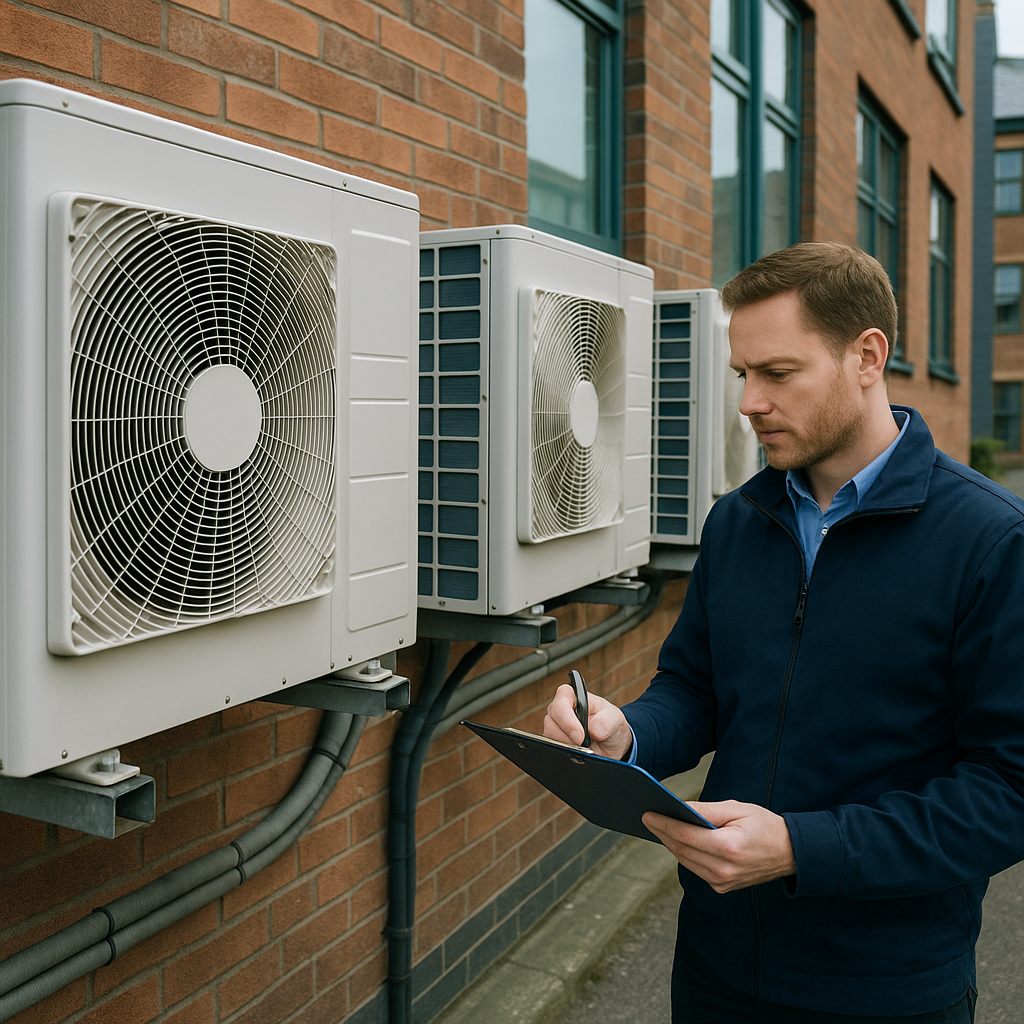
A TM44 inspection must be conducted by an accredited energy assessor holding the appropriate qualifications. At AirCert, our assessors hold both Elmhurst Energy Level 3 and Level 4 accreditation, meaning we are qualified to inspect the full range of air conditioning system types and complexities — from simple single-split systems through to complex centralised and multi-system installations found in larger commercial buildings.
The distinction between Level 3 and Level 4 matters when it comes to meeting TM44 inspection frequency requirements correctly. Level 3 covers systems in simpler configurations, while Level 4 covers complex systems of any output — including centralised plant, chilled water systems and multi-zone VRV/VRF installations. Holding both levels of accreditation means we can issue TM44 certificates for any qualifying system without needing to refer work elsewhere.
Why Choose a Locally Based TM44 Inspector?
Based in Middlesbrough and covering the whole of the North East of England and Yorkshire, AirCert offers practical advantages for regional building managers and landlords. A locally based assessor means faster response times, lower travel costs passed on to clients, and direct familiarity with the types of commercial building stock common across the region — from modern office developments in Newcastle and Leeds to converted industrial premises in Teesside and the wider Tees Valley.
Frequently Asked Questions About TM44 Inspection Frequency
Does a TM44 Inspection Replace Regular Air Conditioning Servicing?
No. A TM44 inspection is an energy efficiency assessment — it is not a maintenance visit. Regular servicing by an F-Gas registered engineer remains essential for system reliability, refrigerant compliance and warranty purposes. The two processes are complementary, not interchangeable. Many clients find it practical to coordinate their TM44 inspection with their F-Gas service check on the same day, meeting two compliance requirements in a single site visit and minimising disruption to building occupants.
Is a TM44 Inspection Needed for Heating-Only Systems?
No. TM44 inspection frequency requirements apply specifically to air conditioning systems — those capable of cooling. Heat pumps operating in cooling mode or providing both heating and cooling do fall within scope if their cooling output exceeds 12kW. Heating-only systems are covered by separate boiler inspection regulations under the same Energy Performance of Buildings framework.
What If My System Was Installed Less Than Five Years Ago?
New air conditioning systems are not exempt from TM44 inspection frequency requirements. If your system’s effective rated output exceeds 12kW, you must obtain a TM44 inspection within the first five years of installation — there is no grace period for new installations. An early inspection also provides a useful baseline against which future assessments can be compared, helping demonstrate efficiency improvements over time.
Do Residential Properties Need a TM44 Inspection?
Domestic dwellings are generally exempt, as residential air conditioning systems in the UK rarely exceed the 12kW threshold. However, large Houses in Multiple Occupation (HMOs) or mixed-use buildings with communal cooling systems may fall within TM44 inspection frequency requirements depending on total combined output. If you are unsure, seek professional advice before assuming an exemption applies.
Can I Schedule My TM44 Inspection Alongside Other Compliance Work?
Absolutely — and we actively encourage it. Many clients in the North East coordinate their TM44 inspection with EPC renewals, Display Energy Certificates, F-Gas service checks or planned maintenance visits. Combining compliance tasks in a single site visit reduces disruption to building occupants, simplifies your compliance calendar, and in many cases reduces overall cost. Speak to us when booking and we will work around your operational requirements.
Stay Compliant — Book Your TM44 Inspection Today
Understanding TM44 inspection frequency is the first step — acting on it is what keeps your building compliant and your energy costs under control. If your current certificate is approaching its expiry date, or if you have never had an inspection carried out, now is the time to act. AirCert provides professional, fully accredited TM44 inspections across the North East of England and Yorkshire, with clear reports and actionable energy-saving recommendations delivered promptly.
Ready to book or need advice on whether TM44 inspection frequency requirements apply to your building? Get a quote from AirCert today and ensure your building stays fully compliant with current regulations.