
Qualifications & Accreditations — Why AirCert’s Credentials Matter
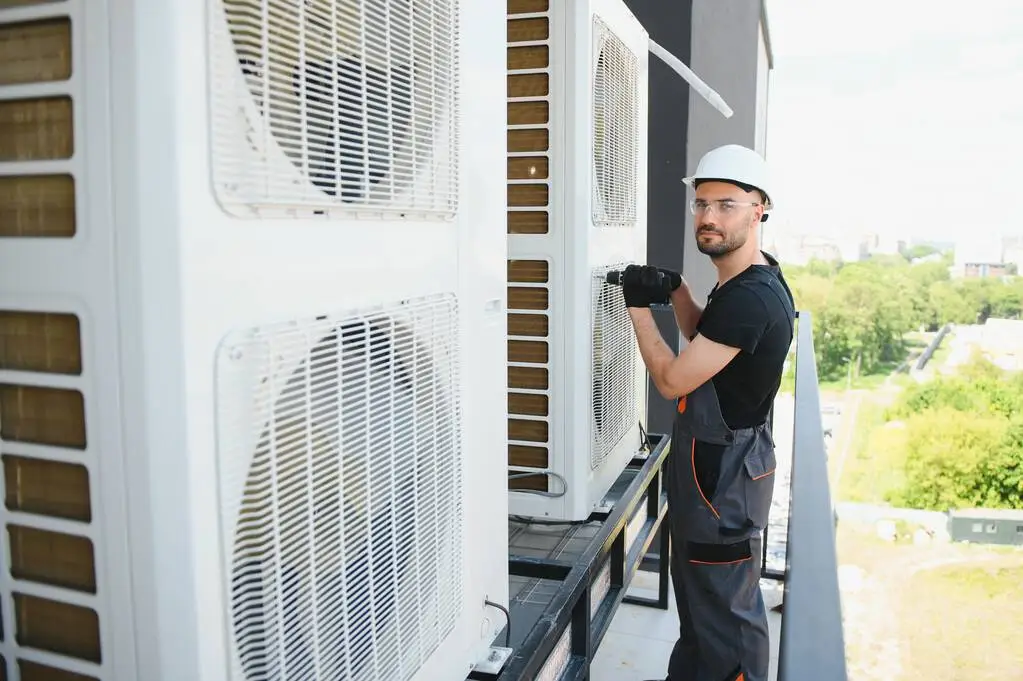
AirCert: Your Elmhurst Accredited TM44 Inspector in the North East
Choosing an Elmhurst accredited TM44 inspector is not just good practice — it is a legal requirement. Under the Energy Performance of Buildings Regulations 2012, only inspectors registered with an approved accreditation scheme can legally produce TM44 air conditioning inspection certificates. At AirCert, we hold both Level 3 and Level 4 accreditation through Elmhurst Energy, the UK’s largest government-approved accreditation body for energy assessors.
This dual accreditation means every inspection AirCert carries out and every certificate issued meets the precise standards required by UK law. Whether your building has a simple split system or a complex multi-zone VRF installation, our qualifications cover it. This page explains what these credentials mean, why they matter for your compliance, and how to verify them independently.
What Does Elmhurst Accreditation Mean for Your TM44 Certificate?
Elmhurst Energy has operated as a government-approved accreditation scheme since 1993, operating under oversight from the Ministry of Housing, Communities and Local Government. Becoming an Elmhurst accredited TM44 inspector is not simply a matter of paying a membership fee. Assessors must pass rigorous examinations, demonstrate practical competence, and maintain their knowledge through ongoing professional development.
Elmhurst also conducts regular audits of registered assessors’ work. This quality oversight gives building owners and facilities managers genuine confidence that an Elmhurst accredited inspector knows precisely what they are doing — and that the certificate they produce has real legal standing.
The consequences of using an unaccredited inspector are serious. Building owners who hold certificates produced by unaccredited individuals are not in compliance with the regulations, regardless of how professional those documents appear. This exposes them to enforcement action and means they have spent money on a worthless certificate that offers no protection during property transactions or regulatory inspections.
Level 3 Accreditation: Standard Air Conditioning Systems
Level 3 (L3) accreditation qualifies an Elmhurst accredited TM44 inspector to assess the standard air conditioning systems found in the majority of commercial buildings across the North East. These include split and multi-split systems, packaged rooftop units, fan coil units with direct expansion cooling, and portable or through-wall units.
The L3 examination tests candidates on refrigeration principles, system components, controls, maintenance practices, and the CIBSE TM44 inspection methodology. Inspectors must demonstrate they can identify inefficiencies, assess whether systems are correctly sized for their building, and provide practical recommendations that reduce energy consumption and running costs.

Level 4 Accreditation: Complex and Large-Scale Systems
Level 4 (L4) accreditation extends an Elmhurst accredited TM44 inspector’s competence to cover complex installations that many inspectors are not qualified to assess. This includes Variable Refrigerant Flow (VRF) and Variable Refrigerant Volume (VRV) systems, chilled water systems with central chillers, large central plant serving multiple zones, absorption chillers, combined heating and cooling systems, and BMS-controlled installations.
Many TM44 inspectors hold only L3 accreditation. This becomes a serious problem when they encounter VRF systems in modern office developments or chilled water plant in hospitals and larger commercial buildings. An L3-only inspector cannot legally inspect these systems. Any certificate they issue for such installations is invalid, leaving the building owner exposed despite believing they are compliant.
Our dual L3 and L4 accreditation means AirCert can handle any commercial air conditioning system regardless of complexity. From a handful of wall-mounted splits in a small office to a sophisticated VRF installation with dozens of indoor units and centralised control across multiple floors, we have the qualifications to inspect it properly and issue a certificate that satisfies every legal requirement.
The Legal Framework: Why an Elmhurst Accredited TM44 Inspector is Non-Negotiable
The Energy Performance of Buildings Regulations 2012 require any commercial building with air conditioning systems totalling 12kW or more to hold a valid TM44 certificate, renewed at least every five years. The regulations specify that the inspector must be registered with an approved accreditation scheme — and Elmhurst is the largest and most widely recognised of those approved bodies.
A heating engineer, an HVAC maintenance contractor, or a refrigeration technician cannot produce a valid TM44 certificate unless they also hold specific TM44 accreditation. Their other qualifications, however impressive, simply do not satisfy the legal requirement. If you are unsure whether your current certificate was produced by an accredited inspector, contact AirCert and we will help you verify its validity.
Verifying Our Accreditation: Complete Transparency
Elmhurst Energy maintains a public register of all accredited assessors, searchable by name or registration number. Anyone can verify an inspector’s credentials before commissioning work. We actively encourage building owners and facilities managers to check our registration before instructing us — reputable professionals welcome scrutiny of their credentials.
You can find our entry on the Elmhurst register by visiting the Elmhurst Energy website and searching the assessor database. If any inspector is unwilling or unable to provide registration details for independent verification, treat this as a significant warning sign.

Continuing Professional Development: Staying Current as an Elmhurst Accredited TM44 Inspector
Elmhurst requires all registered assessors to complete continuing professional development activities each year. This ensures that every Elmhurst accredited TM44 inspector remains current with regulatory changes, new system technologies, and developments in energy efficiency best practice. CPD records are audited, and assessors who fail to maintain their knowledge risk losing their accreditation entirely.
We take professional development seriously. Beyond the mandatory requirements, we stay current with industry publications, manufacturer training on new system types, and developments in building services engineering. When you commission an inspection from AirCert, you get current expertise applied to your specific situation — not outdated knowledge from a qualification obtained years ago and never refreshed.
Ready to Book Your TM44 Inspection?
AirCert provides Elmhurst accredited TM44 inspector services across Middlesbrough, Teesside, and the wider North East and Yorkshire region. With dual L3 and L4 accreditation, professional indemnity insurance, and verifiable credentials, we deliver inspections that satisfy every legal requirement and provide genuine value to building operators.
Whether you manage a single commercial premises or a portfolio of sites, get in touch with AirCert today for a straightforward quote and to discuss your inspection requirements. We respond the same day and can usually schedule inspections within one to two weeks.

Your local partner for accredited TM44 air conditioning inspections across the North East & Yorkshire.
Call us 07804593371
hello@acinspect.co.uk
Navigate
Areas We Cover
Serving the North East & Yorkshire
Copyright © 2025 AirCert. All rights reserved.